Weathering the Storm? School Board Members Adaptation to Turbulent Pandemic Times
The COVID-19 pandemic created unprecedented challenges for school districts, compelling school boards to navigate extraordinary levels of uncertainty and disruption. This study explores how school boards in two Missouri districts adapted to the pandemic’s turbulence by employing turbulence theory as an analytical framework. Using a comparative case study design, the research integrates data from interviews with board members and administrators, meeting minutes, and district documents to examine the factors that shaped their responses. District A, situated in a politically diverse community, experienced amplified turbulence due to heightened public dissent, cascading policy decisions, and frequent revisions to reopening plans. Conversely, District B, characterized by greater political homogeneity and leadership continuity, faced lower levels of turbulence, maintaining stability through streamlined decision-making and consistent communication strategies.
The findings reveal critical dynamics in how governance structures, political contexts, and leadership strategies interact to influence organizational resilience during crises. Additionally, the study underscores the pivotal role of school boards in addressing community tensions, fostering trust, and implementing policies during periods of extreme disruption. By focusing on the intersections of governance, political positionality, and stakeholder engagement, this research provides actionable insights into fostering adaptability and resilience in public education systems. The study contributes to the growing body of literature on educational governance and crisis leadership, offering a foundation for more effective and equitable responses to future systemic disruptions.
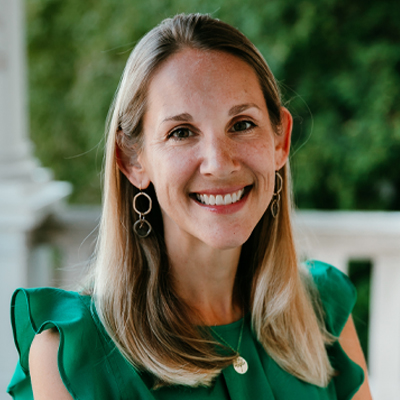
Dr. Emily Crawford-Rossi is an Associate Professor in the Department of Educational Leadership and Policy Analysis at the University of Missouri. She is also a faculty affiliate with the Harry S. Truman School of Public Affairs and a fellow with the MU Cambio Center.

Dr. Blake Willoughby serves as a Board Member for Columbia Public Schools and is a researcher specializing in K-12 Educational Leadership and Policy Analysis.
School Board Member’s Data Sensemaking and Decision-making
School boards play a pivotal role in shaping K-12 educational policy, yet their decision-making processes often remain underexplored. This study investigates how school board members make sense of data and agenda items, how they arrive at decisions, and whether these processes differ between suburban and rural districts. Drawing on Weick’s sensemaking theory, we conducted a qualitative case study of eight board members across two Missouri districts—one suburban and one rural. Semi-structured interviews, meeting minutes, and local and state-level documents provided a rich data set for analysis. Findings reveal two key themes: (1) a reliance on superintendents as gatekeepers of information, which can limit diverse perspectives in decision-making; and (2) variations in data engagement practices, with rural board members benefiting from informal community interactions that provide additional insights. This research highlights the complexities of school board governance, emphasizing the need for equity-oriented decision-making frameworks that consider the unique dynamics of local contexts. Our findings have implications for improving data use and fostering inclusive practices within school boards to better serve their communities.
Dr. Blake Willoughby serves as a Board Member for Columbia Public Schools and is a researcher specializing in K-12 Educational Leadership and Policy Analysis.
Dr. Emily Crawford-Rossi is an Associate Professor in the Department of Educational Leadership and Policy Analysis at the University of Missouri. She is also a faculty affiliate with the Harry S. Truman School of Public Affairs and a fellow with the MU Cambio Center.
 sewoonglee.net